Contact person: Mr. Li
Tel: 138-4089-3242
138-8966-7314
Email: madapeng0729@163.com
website: www.dllsyj.cn
Address: houmu Industrial Zone, Yingchengzi Town, Ganjingzi District, Dalian
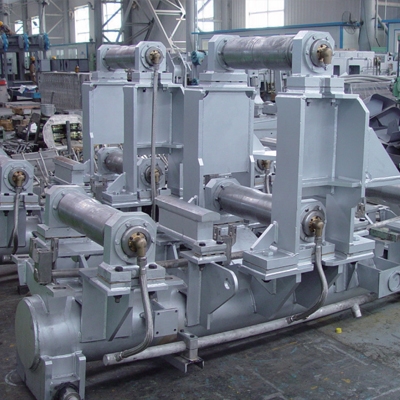
As the core component of metallurgical continuous casting equipment, the selection of Dalian anisotropic steel sector directly affects the stability of continuous casting production, the quality of castings, and the service life of equipment.
1、 Basic concepts and functions of anisotropic steel sector segments
Heterogeneous steel sector refers to a special sector used for the curved or horizontal section of continuous casting machines, mainly used for producing special-shaped steel billets (such as continuous casting billets of I-beams, channel steels, and other special-shaped profiles). Compared with traditional slab and billet segments, anisotropic steel segments have the following characteristics:
The roller array design is complex and needs to adapt to irregular cross-sectional shapes
The supporting structure is special and needs to withstand uneven loads
Differentiation of cooling system to meet the cooling requirements of irregular cross-sections
Precise guiding device ensures the accuracy of casting billet shape
2、 Key parameters for selecting opposite steel sector segments
1. Sectional parameters of cast billet
This is the main consideration factor for selection, including:
Section shape: H-shaped, I-shaped, groove shaped and other different types
Sectional dimensions: critical dimensions such as web height, flange width, waist thickness, etc
Sectional area: directly affects the design of the bearing capacity of the sector segment
Asymmetry of cross-section: affecting the arrangement of roller rows and the balance of force distribution
2. Metallurgical length parameters
Metallurgical length requirements: Determine the required metallurgical length based on the steel grade and pulling speed
Number of sectors: metallurgical length divided by the length of a single sector
Segmentation method: allocation ratio of straight, curved, and straightened segments
3. Mechanical structural parameters
Roll diameter and roll spacing: The roll diameter is usually 1.1-1.3 times the thickness of the cast billet, and the roll spacing is 3-5 times the roll diameter
Roll body length: should be 50-100mm larger than the width of the cast billet to the maximum
Opening adjustment range: Consider casting shrinkage and bulging amount
Accuracy of centering device: usually required to be within ± 0.5mm
4. Material and strength parameters
Roller material: usually made of heat-resistant alloy steel (such as 42CrMo)
Bearing type: Double row self-aligning roller bearings are commonly used
Allowable stress: The safety factor of critical components shall not be less than 2.5
Thermal deformation allowance: Consider dimensional changes at operating temperature
5. Cooling system parameters
Cooling water volume: calculated based on the cross-section and casting speed of the billet
Cooling water pressure: usually 0.3-0.6MPa
Nozzle layout: Need to match the irregular cross-sectional shape
Partition control: differential cooling may be required for the web and flange
6. Drive and control parameters
Drive mode: electric mechanical drive or hydraulic drive
Speed range: It should cover the pulling speed range required by the process
Position control accuracy: usually ± 0.1mm
Pressure control accuracy: clamping force control within ± 5%
3、 Special considerations during the selection process
1. Special requirements brought by irregular cross-sections
Asymmetric load treatment: it is necessary to strengthen the support on the side with greater stress
Roller seam shape matching: The roller contour needs to accurately match the shape of the casting billet
Guiding device design: prevent the casting billet from deviating or twisting
2. Adaptability considerations for steel grades
High carbon steel: requires a larger roll gap shrinkage allowance
Stainless steel: higher roller cooling requirements need to be considered
Alloy steel: needs to match its high temperature strength and phase transformation characteristics
3. Matching production rhythm
Maximum pulling speed: determines the dynamic performance requirements of the sector segment
Change section time: affects the rapid replacement design of the sector segment
Maintenance cycle: determines equipment reliability and maintainability requirements
4、 Selection process and method
Collect basic data: including product outline, steel grade characteristics, process parameters, etc
Preliminary scheme design: Determine the number of segments, layout, and basic parameters
Mechanical calculation verification: Conduct verification of strength, stiffness, thermal deformation, etc
Cooling system calculation: Ensure that the cooling capacity meets the process requirements
Drive system selection: Choose the appropriate drive mode based on the load characteristics
Control system configuration: Determine detection points and control strategies
Scheme optimization and adjustment: parameter optimization based on calculation results
Final plan determination: Form a complete selection technical specification document
5、 Common selection misconceptions and avoidance methods
Neglecting the specificity of the cross-section: simply applying conventional sector parameters
Solution: Special design based on the characteristics of irregular cross-sections
Underestimating the impact of thermal load: causing excessive deformation of the rollers
Solution: Conduct a detailed thermodynamic coupling analysis
Insufficient cooling system design: resulting in uneven cooling of the casting billet
Solution: Adopt a cooling system with partition independent control
Insufficient driving ability: slippage occurs at high pulling speeds
Solution: Calculate the driving demand based on the maximum operating conditions
Inadequate consideration for maintainability: leading to difficulties in maintenance
Solution: Adopt modular design and reserve maintenance space
The selection of anisotropic steel segments is a systematic project that requires comprehensive consideration of various factors such as process, mechanical, electrical, hydraulic, etc. The correct selection not only ensures the smooth progress of continuous casting production, but also improves the quality of castings, reduces energy consumption, and lowers maintenance costs. In the actual selection process, it is recommended to closely cooperate with experienced sector manufacturers, fully utilize their engineering experience and technical accumulation, and combine their own production characteristics for customized design, ultimately obtaining a better sector configuration solution.
 Company service hotline:
 Address: houmu Industrial Zone, Yingchengzi Town, Ganjingzi District, Dalian