Contact person: Mr. Li
Tel: 138-4089-3242
138-8966-7314
Email: madapeng0729@163.com
website: www.dllsyj.cn
Address: houmu Industrial Zone, Yingchengzi Town, Ganjingzi District, Dalian
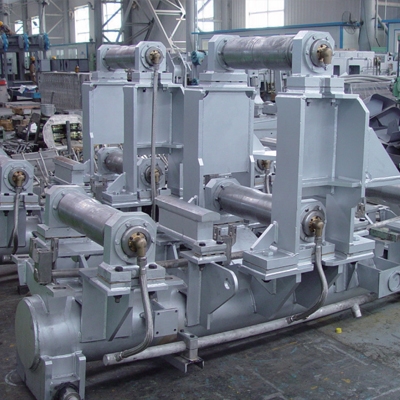
As a key component in continuous casting equipment, the classification and selection of the type of anisotropic steel sector directly affect the quality and efficiency of the continuous casting process.
1、 Basic concepts and functions of anisotropic steel sector segments
The anisotropic steel sector is the core component used to support and guide the casting billet in continuous casting machines, named after its special cross-sectional shape and material of special steel. Its main functions include:
Support high-temperature castings to prevent deformation
Accurately guide the billet to move along the predetermined path
Control the cooling rate of the casting billet
Adjust the shape and dimensional accuracy of the casting billet
2、 Main model classification of anisotropic steel sector segments
(1) Classified by structural form
Integral sector segment
Model examples: ZS-1, ZS-2 series
Features: Simple structure, good rigidity, easy maintenance
Applicable scenarios: Small and medium-sized continuous casting machines, producing ordinary steel grades
Split sector segment
Model examples: FS-3, FS-5 series
Features: Can be replaced in sections, high flexibility
Applicable scenarios: Large continuous casting machines, producing special steel grades
Quick change sector segment
Model examples: KHS-200, KHS-300 series
Features: Short replacement time, high production efficiency
Applicable scenarios: Multi variety, small batch production mode
(2) Classified by cooling method
Water-cooled sector segment
Model examples: SL-4, SL-6 series
Features: High cooling efficiency, low cost
Applicable scenario: Ordinary carbon steel continuous casting
Aerosol cooled fan-shaped segment
Model examples: QW-5, QW-8 series
Features: Uniform cooling, low thermal stress
Applicable scenarios: High quality steel grades such as stainless steel and alloy steel
Composite cooling sector segment
Model examples: FH-10, FH-15 series
Features: Combining the advantages of water cooling and aerosol cooling
Applicable scenarios: Ultra wide slab, special alloy steel
(3) Classified by driving method
Electric sector segment
Model examples: DS-100, DS-200 series
Features: Accurate control, fast response
Applicable scenario: High precision continuous casting production line
Hydraulic sector segment
Model examples: YY-300, YY-500 series
Features: Strong strength, good stability
Applicable scenario: Production of large section castings
Hybrid drive sector
Model examples: HH-400, HH-600 series
Features: Combining electronic control accuracy and hydraulic power
Applicable scenario: High end special steel production
3、 Analysis of Applicable Scenarios for Heterosexual Steel Segments
(1) Production of ordinary carbon steel
Recommended models: ZS-2, SL-4 series
Meet basic support and cooling needs
Good economy and low maintenance cost
Suitable for production lines with an annual output of less than 500000 tons
(2) Production of stainless steel and alloy steel
Recommended models: QW-8, FH-15 series
Accurate temperature control capability
Excellent thermal fatigue resistance
Suitable for steel grades with high surface quality requirements
(3) Production of special section castings
Recommended models: YY-500, HH-600 series
Strong support and adjustment ability
Can adapt to the requirements of irregular cross-sections
Suitable for special products such as H-beams and round billets
(4) High automation production line
Recommended models: DS-200, KHS-300 series
High precision position control
Rapid response and adjustment capability
Suitable for integration with intelligent control systems
4、 Precautions for Selection of Heterosexual Steel Segments
Production process compatibility: Select the appropriate model based on the characteristics of the steel grade and the specifications of the casting billet
Equipment compatibility: Consider matching the interface with existing continuous casting machines
Maintenance convenience: Evaluate maintenance cycle and difficulty level
Cost benefit ratio: Balancing initial investment and long-term operating costs
Technological foresight: considering the possibility of future product upgrades
The technological progress of anisotropic steel sector segments will continue to promote the development of continuous casting technology, and the correct selection and use of suitable sector segment models are of great significance for improving the quality and production efficiency of continuous casting products.
 Company service hotline:
 Address: houmu Industrial Zone, Yingchengzi Town, Ganjingzi District, Dalian