Contact person: Mr. Li
Tel: 138-4089-3242
138-8966-7314
Email: madapeng0729@163.com
website: www.dllsyj.cn
Address: houmu Industrial Zone, Yingchengzi Town, Ganjingzi District, Dalian
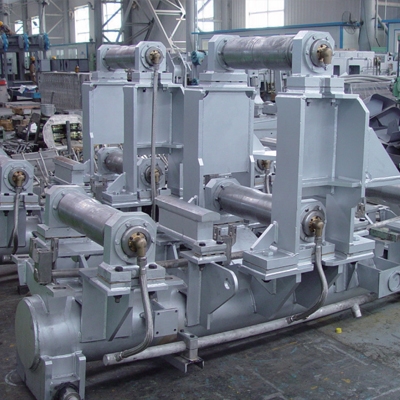
The Dalian crystallizer is a core and crucial equipment in steel continuous casting production, and its performance directly determines the quality of cast billets, production efficiency, and safe production. As a heavy industrial base in China, Dalian is densely populated with steel and metallurgical enterprises, and the daily maintenance and professional care of crystallizers are important links in ensuring stable production. This article will focus on the core points of crystallizer maintenance and local professional service institutions in Dalian, providing practical references for enterprises.
1. Core points of daily maintenance and care for the crystallizer
The maintenance of the crystallizer should cover the entire process from "daily inspection to regular deep maintenance to fault diagnosis", with a focus on the following key links:
1. Mould copper plate: fine management of wear and plating
The copper plate is the component that comes into direct contact with high-temperature molten steel, and its condition is of utmost importance for maintenance:
Routine inspection: Check the surface of the copper plate daily for scratches, pits, and steel residue, and use specialized tools to remove any attachments (to avoid damaging the surface). Measure the thickness of the copper plate weekly, and replace it immediately if the wear exceeds the design limit (usually 3-5mm).
Plating maintenance: Most copper plates are coated with wear-resistant layers such as chromium plating and nickel-cobalt alloy plating. It is necessary to check the integrity of the plating monthly. If peeling or flaking occurs, the plating should be reapplied in a timely manner (the thickness of the plating should meet the design requirements: for example, the chromium plating thickness should be ≥0.15mm).
2. Cooling system: anti-blockage and water quality control
The cooling system is crucial for maintaining thermal balance in the crystallizer, and it is necessary to prevent "scaling, leakage, and blockage":
Daily inspection: Check the temperature difference between the inlet and outlet of the cooling water circuit daily (normal ≤5℃). If the temperature difference is too large, it indicates that the water seams are blocked. Check the seals (O-rings, flange gaskets) for any leakage to avoid a decrease in cooling efficiency.
Regular maintenance: Test the cooling water quality monthly (conductivity ≤50μS/cm, pH value 7-9, hardness ≤5mg/L), and replace the cooling liquid or install a water quality processor if necessary; clean the water seams with high-pressure water quarterly to remove scale and debris.
3. Vibration system: Parameters and lubrication guarantee
The oscillation of the crystallizer can prevent the molten steel from sticking to the wall, and it is necessary to ensure that the oscillation trajectory meets the process requirements:
Routine inspection: Check the lubrication status of the vibration mechanism daily (add dedicated high-temperature lubricating oil); inspect bearing wear and the tightness of connecting bolts weekly.
Regular calibration: Calibrate the amplitude (±0.1mm) and frequency (±0.5Hz) with a vibration tester every month to ensure that the vibration trajectory follows a sinusoidal curve, thereby avoiding excessive deflection that could lead to transverse cracks in the cast billet.
4. Accuracy testing: Regular calibration of taper and perpendicularity
The precision of the crystallizer directly impacts the quality of the cast billet:
Monthly inspection: Use a laser measuring instrument to inspect the taper (deviation ≤ 0.1mm/m), perpendicularity (deviation ≤ 0.2mm/m), and width deviation (≤ 0.5mm) of the crystallizer to prevent longitudinal cracks in the cast billet.
Quarterly calibration: Conduct precision calibration on the liquid level control system (electromagnetic liquid level gauge, stopper mechanism) to ensure liquid level fluctuation is ≤±5mm.
II. Key criteria for selecting professional service agencies
When selecting crystallizer maintenance services, enterprises need to focus on three key points:
Qualifications and Cases: Whether they possess metallurgical equipment maintenance qualifications and have experience working with well-known enterprises;
Technical capability: Whether the company possesses professional tools such as laser measuring instruments and coating equipment, and whether the technical team members are certified to work;
Service efficiency: Whether it can respond to faults quickly (such as providing on-site service within 24 hours) to minimize downtime losses.
Conclusion
Crystallizer maintenance is a systematic project that requires a combination of daily standardized operations and professional regular maintenance to extend equipment life and reduce the risk of failure. Local professional service providers in Dalian can provide efficient and reliable technical support. Enterprises should choose suitable partners based on their own needs to jointly ensure stable production and product quality.
 Company service hotline:
 Address: houmu Industrial Zone, Yingchengzi Town, Ganjingzi District, Dalian